
India did not become a badminton powerhouse overnight. The rise came from decades of grit, underfunded pioneers, landmark wins, smarter coaching, and a system that slowly learned how to turn talent into medals. For beginners, the big story is simple: India keeps producing world-class badminton players because each generation has built something the next one could use better.
Badminton Powerhouse: Why India Keeps Producing World-Class Players Quick Answer
India keeps producing top badminton players because the country now combines deep history, iconic role models, strong academies, disciplined coaching, wider access to courts, and visible international success. Once Indian stars proved they could win major titles, the talent pipeline became much stronger.
It started much earlier than most people think
The story begins with one of the sport’s strangest little turning points: a coin toss. In 1947, Prakash Nath became the first Indian to reach the All England final, and before that he had correctly called a toss ahead of Devinder Mohan to make the semifinals. It sounds like a tiny detail, but it became part of Indian badminton history.
That is why Badminton Powerhouse: Why India Keeps Producing World-Class Players is not only about modern stars. It is also about a sporting culture that started taking shape in the 1940s and kept surviving even when support was thin.
For many fans today, badminton feels familiar and easy to follow, almost as routine as checking scores or searching for a 1xbet download app on a phone. But the sport’s roots in India were far tougher. Players often travelled with limited support, trained with poor equipment, and still found ways to compete with the best.
The first big signs came in team events
India’s early Thomas Cup runs mattered because they created belief. In May 1952, India reached the inter-zone playoffs, which were effectively the semifinals. The team beat Denmark 6-3 before losing to the USA 4-5. If India had won that tie, the next opponent would have been Malaya, the defending champion.
Then came another strong run in 1955 at Singapore. India again reached the playoffs, beat the USA 6-3, and then lost to Denmark 3-6. For a beginner, this is an important point: India was not a late arrival in elite badminton. It had already shown real quality decades ago.
Nandu Natekar became one of the first breakout names from that period. He was known for elegant strokeplay, sharp anticipation, and deception. His match against Denmark’s Fin Kobber in 1955 was widely remembered as one of the standout contests of the tournament.
But talent was moving faster than the system. Natekar could play the All England only once, in 1954, and even that happened after friends raised money through a Natekar Fund. Only TN Seth’s trip was government-sponsored.
Why the old struggles still matter
To understand India’s rise, it helps to understand how difficult the sport used to be. Dinesh Khanna, India’s first semifinalist at the All England in 1966 and the first Indian to win the Asian title in 1965, belonged to a generation that had to fight basic limitations every day.
Training conditions were not ideal. Players often used Indian shuttles made of duck feathers, which broke easily and behaved differently because of the heavy cork. Better goose-feather shuttles gave truer length and longer rallies, but they were not always available. That may sound like a small equipment issue, but in badminton it affects timing, control, and confidence.
There were money problems too. Khanna recalled that stronger players were sometimes told not to hit the shuttle too hard because shuttles were expensive.
That says a lot.
Even travel and living conditions could be rough. Around the 1974 Asian Games period, players stayed in a dormitory at the Railway stadium with no ventilation. One family member cooked food for a player, and Prakash Padukone was once seen carrying a bucket of hot water from the officers’ guesthouse. These details show that Indian badminton was built on persistence long before it had comfort.
Prakash Padukone changed what Indian players believed
Every sport needs a figure who changes ambition. For Indian badminton, that figure was Prakash Padukone. At 16, the Mysore player shocked senior names by winning the 1972 Madras Nationals. That victory did more than add a title to his record. It gave young Indian players a new idea of what was possible.
His influence was cultural as well as competitive. Padukone’s rise helped shuttle badminton dislodge ball badminton from the prime spot in south India. Once that shift happened, more players, families, and coaches began investing their attention in the version of the sport played on the global stage.
He also made a major impact in team competition. In a Thomas Cup round in Auckland, Padukone teamed up with Asif Parpia as India beat New Zealand 5-4 and reached the playoffs for the first time since 1955. In 1979, India beat Malaysia 5-4, with Padukone winning three singles. That was a serious statement in Asian badminton.
Then came the breakthrough many people still see as a defining moment: Padukone’s All England title in 1980. Once an Indian player won one of badminton’s most prestigious events, the mental barrier changed. The dream stopped looking unrealistic.
The sport slowly became a real career option
Another reason India keeps producing elite players is that badminton gradually became more viable as a profession. Earlier, even accepting prize money could put a player’s amateur status at risk. Khanna remembered turning down prize money in Bombay in 1966 because taking it could lead to debarment.
Things began to shift by 1979. Padukone won the London Masters, beating Morten Frost, and earned prize money of 5,000 pounds. The amount itself was striking, but the bigger point was what it represented: badminton was moving toward a more professional future.
- Early generations proved India could compete internationally.
- Padukone proved India could win the biggest titles.
- A more professional structure made long-term training more realistic.
- Success created visibility, and visibility attracted more players.
Gopichand turned isolated success into a system
If Padukone changed ambition, Pullela Gopichand changed production. He first matched that legacy by winning the All England in 2001, ending a 21-year gap after Padukone’s title. Then he became the coach who helped build a repeatable pathway.
When Gopichand started coaching in 2004, he had 25 trainees in Hyderabad. Among them were young players who would later become major names, including Saina Nehwal, PV Sindhu, and K Srikanth. At that stage, very few people expected one coaching environment to produce so many world-class players.
His training ideas mattered. Gopichand pushed a more physical style built around speed, jumping, stretching, and relentless court coverage. He had wanted to use that formula more fully in his own playing career, but injuries got in the way. As a coach, he could finally shape players around that model.
The infrastructure story is just as telling. In 2004, Hyderabad had about 10 good courts. Later, that number rose to more than 1000. That is a huge jump, and it matters because more courts mean more access, more practice time, more local competition, and more chances for children to stay in the sport.
The women made badminton impossible to ignore
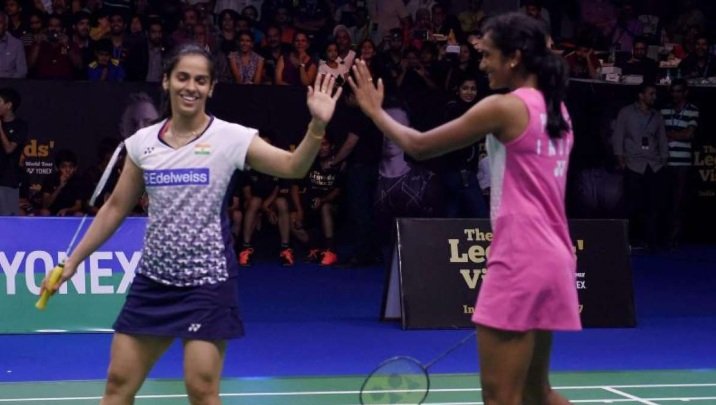
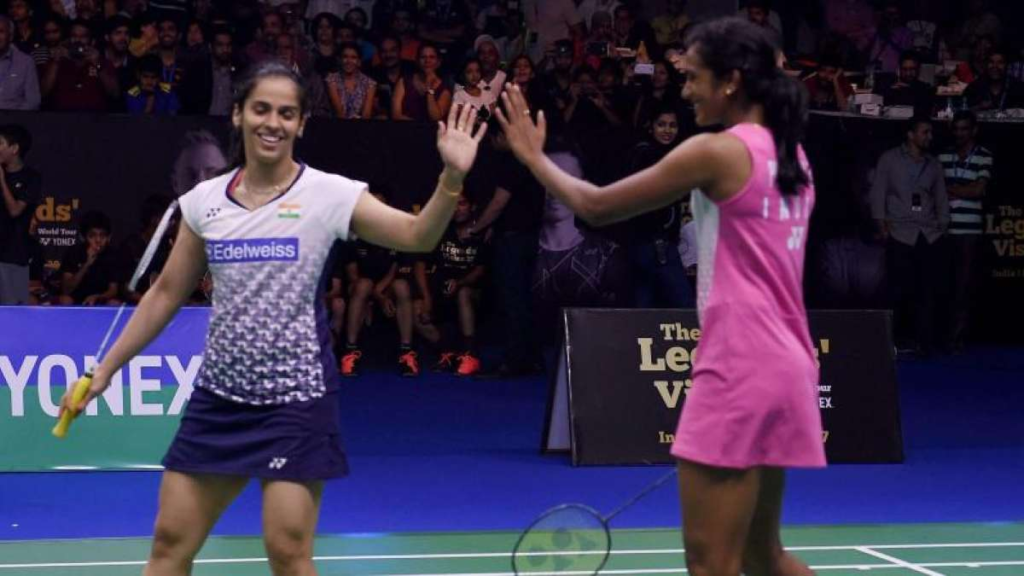
India’s badminton boom became much more visible when women started winning consistently at the top level. Saina Nehwal was the major game changer. Her success made badminton feel mainstream in homes that had not followed the sport closely before.
Then PV Sindhu pushed that visibility even further. Once Indian families saw women from India winning major international matches with power and confidence, badminton stopped feeling like a niche sport. It became aspirational.
The 2010 Commonwealth Games gave another push. India had formed a core group of 40 players in 2008, including players connected to the Padukone academy. Saina in singles, along with Jwala Gutta and Ashwini Ponnappa in doubles, won gold and gave the sport fresh momentum.
- Saina made badminton more visible across India.
- Sindhu expanded belief for the next generation.
- Women’s success encouraged more girls to join academies.
- More attention made parents take the sport more seriously.
The men’s side added depth
For a period, Indian women were carrying many of the biggest headlines. Then the men added depth to the story. Kidambi Srikanth and Parupalli Kashyap became major names, and later Lakshya Sen and Priyanshu Rajawat emerged as the next wave.
That balance matters. A true badminton powerhouse is not built on one star or one category.
It needs layers.
The Thomas Cup triumph over four-time champions Indonesia captured that shift perfectly. When Kidambi Srikanth smashed home the winner in Bangkok, it felt like a dream completed for the older generations. India was no longer only producing individual champions. It had become strong enough to win the biggest men’s team title as well.
Why India should keep producing more stars
The future looks strong because the base is much wider now. Children from Punjab, Mizoram, and many other regions are entering academies, and some families even move to Hyderabad so a child can train properly. That kind of commitment usually appears only when a sport has role models and a believable pathway.
Cost could also become less of a barrier over time. Synthetic shuttles are expected to reduce expenses, which matters in a sport where equipment costs can limit regular practice. If training becomes cheaper, the player pool can widen again.
So why does India keep producing world-class badminton players? Because the country has built the right layers over time: pioneers who created belief, champions who changed ambition, coaches who built systems, and stars who made the sport visible. Once all those layers come together, excellence stops looking accidental. It starts looking normal.
FAQ
Q: When did India first show real promise in world badminton?
A: India showed that very early. Prakash Nath reached the All England final in 1947, and India also made strong Thomas Cup runs in 1952 and 1955.
Q: Why is Prakash Padukone such a central figure?
A: He changed Indian badminton’s ambition. His rise in the 1970s and his All England title in 1980 proved that an Indian player could win one of the sport’s biggest titles.
Q: What made Gopichand so important beyond his own playing career?
A: He helped turn success into a system. His coaching setup produced multiple top players and showed that India could create champions consistently, not just occasionally.
Q: How did Saina Nehwal and PV Sindhu change the sport in India?
A: They made badminton more visible and more believable as a serious path. Their success inspired more families, especially girls, to see the sport as a real opportunity.
Q: Why was the Thomas Cup win such a big moment?
A: It showed India had become strong as a team, not just through individual stars. Beating Indonesia for the title confirmed that Indian men’s badminton had real depth.




Leave a Reply